What household management covers
Most of the work falls into five areas. Each one has its own rhythm, so each one needs a slightly different approach.
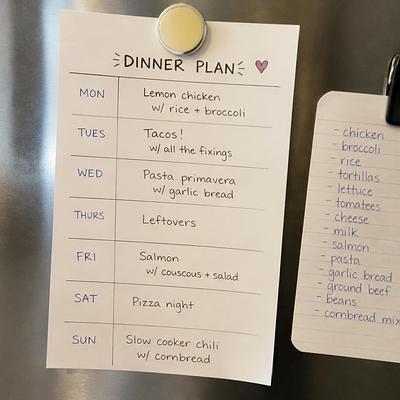
- Daily and weekly rhythms. Who's going where, what's for dinner, what has to happen before Friday. A short planning habit does most of the work here: see how to plan your day and a weekly family meal planning system.
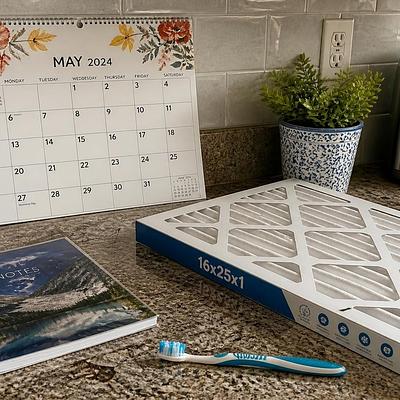
- Recurring upkeep. Furnace filters, smoke alarm batteries, gutters, oil changes. These come due every few months or years, which is exactly why they get forgotten. The household maintenance schedule lists how often each one is due.
- Appointments and health. Checkups, dentist cleanings, eye exams and vaccinations for everyone in the family, each on its own cycle. Here's how to keep track of doctor appointments without memorizing them.
- Paperwork and life admin. Renewals, registrations, insurance, taxes, and the flurry of updates when you move. Start with the adulting tasks people most often forget and the change of address checklist, or browse the life admin posts.
- Planning and sharing the work. Someone has to notice that a job is due, decide when it happens and remember to follow up. That invisible part is often heavier than the job itself. The mental load posts cover how to share it.
Why it feels harder than it should
Most productivity advice assumes your tasks are either daily habits or one-off projects with a clear deadline. Household tasks are neither. They're a steady stream of recurring jobs on irregular timelines, and forgetting one usually costs more than doing it on time would have.
That's why "just make a list" stops working. A list doesn't know that the dentist is due in March, or that you changed the filter early this time. Phone reminders don't solve it either, because they fire at the wrong moment and get dismissed. That's reminder fatigue, and it's why you can set reminders and still miss things.
A simple household management system
You don't need an elaborate setup. A system that works has three parts:
- Write everything down once. List every recurring job, with how often it comes around and who usually does it. The free recurring tasks tracker gives you a ready-made sheet for this.
- Track when each job is next due, based on when it was last done. If the oil change happened a month late, the next one moves too. A schedule that counts from the last time a job was done stays accurate, and a fixed calendar doesn't.
- Make it visible and review it weekly. Spend 15 minutes once a week on what's coming up, so it isn't all in one person's head. Everyone in the house can see what's due, and whoever has time picks it up.
Do those three things and most of household management becomes routine instead of a constant background worry.
Where Gantry fits
I'm building Gantry to be that system: a household management app that tracks every recurring job, works out when each one is next due, and shows the whole family what needs doing this week, without a stream of nagging notifications. If that sounds useful, you can join the waiting list.
The guides below go deeper on each part, starting with the one most families need first.