Change of Address Checklist: Everyone to Notify When You Move
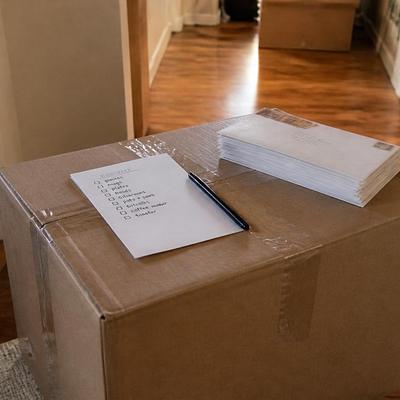
A change of address checklist sounds like one task: fill in the post office form. It isn't. That form moves your mail for a while, and then you spend the next few months finding out which accounts still have the old address on them.
Moving is when the bank statement goes to the old apartment and the tax letter arrives three weeks late. So here's the full list for a move, grouped by what goes wrong if you skip it, and in the order that makes the rest easier. This one is written for the US. You won't need every line, so skim for what applies to you.
Before you start: the order that saves you trouble
Some updates depend on others. A few rules of thumb:
- Start with mail forwarding, then work outward. Forwarding is your safety net while you update everything else, so set it up first and set the start date for moving day.
- Do government and money before subscriptions. A missed streaming bill is annoying. A missed tax notice or bank letter has a deadline.
- Start from a list, not from memory. If you use a password manager, open it first. Every login in there is an account that may hold your address, and scrolling it is the fastest way to build your list of who to update. Some password managers let you tag logins, which can make this easier. Your email inbox works too: search for "receipt", "statement" and "renewal".
- Expect some of it to be done already. Some companies will have caught your move on their own. You might see something like "Electronic Service Requested" on some of your mail, which asks the post office to send them an electronic notice when mail they send is forwarded to a new address. Plan on a few vendors updating themselves, but assume most won't. The notices only go to senders who asked for them, and the post office never updates the address stored in your accounts.
- Update once, then watch the mail. For the first two months, anything still sent to the old address is a sign you missed one. Forwarded mail often arrives with a yellow label, which makes it easy to spot. Keep a list of companies to update on the fridge or in your phone and add to it.
Week 1 to 2 before the move: the essentials
These are the updates where a missed letter costs you money or time.
- Utilities. Schedule a stop date at the old home and a start date at the new one: electric, gas, water, trash, internet. Do this two weeks ahead if you can, since internet installs book up.
- Mail forwarding (USPS). Submit your change of address online or at a post office. A permanent change forwards first-class mail for 12 months, so don't treat it as a replacement for updating each account. Magazines are the exception: periodicals usually stop forwarding much sooner than regular mail (about 60 days), so tell each publisher directly. The online form charges a small identity-verification fee.
- Employer and payroll. Your tax forms and pay stubs go to the address on file. Tell HR before your last pay period at the old address, even if you're not changing jobs.
- Banks and credit cards. Update every account, including savings, loans and the card you only use for travel. Many banks let you do it in the app.
- Bills and donations. Utilities, phone, insurance and loans are the obvious ones. Don't forget the monthly donations to a charity, a church or a public radio station, which are easy to overlook because they quietly come out of your account. A donation receipt that goes to the old address can be a problem at tax time.
- Insurance. Home or renters, car, life. A new address can change your premium, so ask for a new quote, and don't let coverage lapse between homes.
- Health insurance and doctors. Your plan, your pharmacy and each provider's office. If you're changing areas, check that your plan covers your new doctors.
Government updates
- IRS. Use Form 8822 to tell the IRS you've moved, or just put your new address on your next tax return.
- Social Security. You can update your address in your online Social Security account. This also covers Medicare mailings if you receive them.
- DMV: license and vehicle registration. Most states require this within a set number of days after you move, and the window varies by state. Check yours before moving day.
- Voter registration. Re-register at your new address. Deadlines before an election are firm.
- Passport. Your passport doesn't carry your address, so there's no update needed. Renewals later will use your new one.
Money and accounts that bill you
- Loans and mortgage. Student loans, auto loans, the mortgage servicer. Late notices are the usual cost of forgetting.
- Investment and retirement accounts. Statements and tax forms go to your address of record.
- Recurring payments. Your payment methods have billing addresses too. A card with the wrong billing address can decline at the worst time. Note that the automatic card-update services card networks run for merchants cover things like a new card number or expiration date. They aren't a reliable way to move your address, so update the billing address on each card yourself.
Family and daily life
- Schools and childcare. Enrollment is often tied to your address, so contact the new school district early. Ask what proof of address they want.
- Pediatrician, dentist, vet. Updating the address is a good moment to ask for records if you're switching providers.
- Pet microchip and license. Update the registry and your local pet license.
- Gym, library, clubs. Small but they'll keep mailing you.
- Friends and family. Send the new address once, with a short note. If you do holiday cards, this is the list to update first.
Online accounts and subscriptions
This is the long tail, and the one most people finish last.
- Shopping: Every store where you've saved an address. Check your default shipping address so the next order doesn't go to the old home.
- Subscriptions: Meal kits, magazines, subscription boxes, software with a billing address.
- Food delivery and rideshare: Saved addresses.
- Phone carrier and the accounts behind your devices: The billing address on each.
- Everything else: Search your email for "order confirmation" or "your statement" from the last year. It's a fast way to find accounts you forgot you had.
Keep a running list of recurring transactions
The most useful thing you can do about all of this is keep one list, ideally before you move. For each recurring payment, write down:
- Who: the vendor or charity.
- How much and how often it's charged.
- How they charge you: ACH from a particular bank account, or a particular credit card.
- When it renews: the date, or the month for annual ones.
Monthly charges are the easy ones, because they show up on every statement. The quarterly, semi-annual and annual ones are what you lose track of, so go back through a full year of statements to catch them.
A list like this pays off more than once:
- When you move, it's your update list.
- When a credit card expires or is replaced, you know exactly which vendors need the new number.
- When you want to audit your subscriptions and see what you're still using.
- When you want to budget a set amount each month toward a large annual, semi-annual or quarterly expense, so it doesn't land all at once.
Two habits make the list easier to keep. E-bills are easier than paper ones: they're in your email, they're searchable, and they don't depend on the mail reaching you. Autopay is a mixed blessing. It's great for never missing a payment, but it's also why you can go years without seeing a vendor, and why they're the hardest to find when you move. If you use autopay, that's the reason to keep the list.
The mistakes that cause most of the mess
Most of the trouble after a move comes from a handful of habits, none of them dramatic.
- Treating forwarding as the finish line. Forwarding hides the problem for a while. When it ends, every account you didn't update starts sending mail to a stranger.
- Updating the account but not the payment method. Your card's billing address and your account's shipping address are separate fields, and the mismatch is what causes a declined order.
- Doing it all in one sitting. Nobody finishes a list this long in an afternoon. Do the essentials first, then ten minutes a day on the rest, and tick items off as you go.
- Forgetting the accounts you rarely open. The old storage unit, the second credit card, the pharmacy you used once. Your password manager and a search of your email for "statement" and "receipt" find most of them.
- Counting on autopay to keep working. It keeps working until a card or billing address stops matching, and you won't notice until a payment fails.
- Not telling the people who send you official mail. Tax and benefit letters are the ones with deadlines, which is why they sit near the top of this list.
If you're renting, add your landlord or property manager: the lease may require a forwarding address for your deposit, and a missed deposit check is a hard one to chase later. If you're staying in the same city, you can skip some of the state-level steps, but the DMV and voter registration usually still change with your street.
Two months later: the cleanup
Check what's still forwarding from the old address, and ask the new residents to hand mail back to the carrier. Keep a note of what you updated and when. If you move again, you'll have a head start, and for things that come around on their own timeline, like irregular tasks that are easy to lose track of, the record is what keeps them from slipping.
Printable change of address checklist
Want it on paper? Copy the headings above into a note or print this page, and tick items off as you go. Moves are the kind of project where remembering adulting tasks is half the battle, and if your move includes new doctors, keeping track of appointments matters just as much once the boxes are unpacked.
A move happens once, but the running list of recurring payments is worth keeping up all year. I'm building Gantry to help with the things that come around again and again in a household, and if that sounds useful, you can join the waiting list. And if you want more posts like this, browse the Life Admin posts.
Frequently asked questions
- How many days before moving should I change my address?
- Start about two weeks before. Set USPS forwarding to begin on moving day, and update utilities, banks and your employer first. The rest can follow in the weeks after.
- Who do I need to notify when I move?
- At minimum: the post office, your employer, banks and credit cards, insurance, health providers, the IRS, Social Security, the DMV and voter registration. Then utilities, schools, subscriptions and online shopping accounts.
- Does the USPS change of address update my accounts?
- No. It forwards mail for a limited time, but it doesn't update the address on any of your accounts. Some senders get a notice of your new address through the post office, but only if they asked for it, so assume you'll need to update most accounts yourself.
- How long does USPS forward magazines?
- Usually for a shorter time than regular mail. First-Class Mail is forwarded for 12 months, while periodicals are forwarded for 60 days under the post office's mail manual. Contact each publisher with your new address.
- Do I have to update my driver's license when I move?
- In most states, yes. The deadline differs by state, so check with your state's DMV.
Stay on top of what matters
Join the waiting list for early access to Gantry, plus a personal discount code.