Family Meal Planning: A Weekly System That Doesn't Take Over Your Sunday
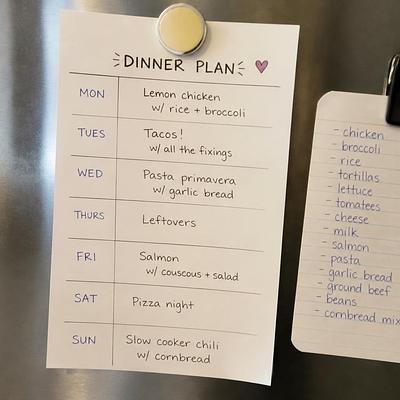
It's 5:40 on a Tuesday. Someone opens the fridge, stares into it, and asks the question: "What's for dinner?" In most homes it gets asked of the same person every night. Even on the nights they have an answer, they're the one who had to come up with it.
Family meal planning fixes this, but most advice makes it sound like a second job: a Sunday spent batch-cooking, a color-coded spreadsheet, seven new recipes a week. That version lasts about three weeks.
What follows is the version that does last. It takes about 15 minutes a week, it works around a real family calendar, and it doesn't depend on one person remembering everything.
Why meal plans fall apart
Before the system, it helps to know why the usual approaches stall. It's rarely about cooking skill. It's usually one of these:
- The plan ignores the week. A plan with homemade lasagna on the night of soccer practice and a dentist appointment isn't a plan; it's a wish.
- There's no slack. Seven planned dinners leave no room for leftovers, a late meeting or the night everyone is too tired to cook. One bad night and the whole plan feels broken.
- It starts from recipes. Browsing for new recipes is the fun part (maybe) and the slow part (definitely). Most weeknight dinners should be meals your family already eats.
- It lives in one head. If only one person knows the plan, that person still fields "what's for dinner?" every night, and still notices when you're out of rice. The plan saved time but not mental load.
The system below is built to avoid each of these.
The weekly family meal planning system
1. Look at the week before you look at food
Start with the calendar, not a cookbook. For each night, ask two questions: who's home for dinner, and how much time is there to cook?
You'll usually find three kinds of nights:
- Cooking nights, when you're home with time to make a real meal.
- Busy nights, with practice, late work or an evening event, where dinner has to take 20 minutes or come out of a slow cooker.
- Off nights, where nobody is cooking: leftovers, takeout or eating out.
Mark each night before you choose a single meal. If you already plan your days with a short morning check-in, this is the same habit applied to the week. I wrote about that in how to plan your day.
2. Plan three to five dinners, not seven
Most families do better planning three to five dinners and leaving the rest of the week open. Start with three if you're new to this; add more if needed once the routine sticks. Leftovers are what make a short plan cover a whole week, so cook extra on purpose. If you're cooking three nights, at least two of those meals should make enough for a second dinner. Any night left after that is a flex night for takeout, sandwiches, breakfast-for-dinner or whatever's easiest.
Those open nights are what make the plan survive contact with real life. When Wednesday goes sideways, you slide Wednesday's dinner to the flex night instead of throwing the plan out.
3. Pull from a list of meals you already like
Keep one running list of dinners your family actually eats. Not recipes you'd like to try someday: meals that have been made and eaten without a fight. For most families it starts at 10–15 meals.
Group them by how long they take, so they match the kinds of nights from step 1:
- Quick (under 30 minutes): pasta with a jarred sauce and a vegetable, quesadillas, fried rice, eggs and toast.
- Hands-off: slow-cooker chili, a sheet-pan chicken and vegetables, a pot of soup.
- Bigger meals: a roast, homemade pizza, anything you'd rather cook on a weekend.
Planning then becomes matching, not inventing. A busy night gets something from the quick list. A cooking night can take something bigger. Try one new recipe a week at most, and if it's a hit, it goes on the list.
4. Use theme nights if choosing is the hard part
If you find yourself stuck staring at the list, give each night a loose theme: pasta Monday, taco Tuesday, soup Thursday, pizza Friday. Themes cut the decision down from "what should we eat?" to "which pasta?", which is a much easier question at the end of a long day. It can also prevent the moment where you realized you've planned a whole week of only pasta recipes. Pick categories that fit the recipes you already have, and don't be too rigid about it. The idea is that it makes planning easier, not harder.
You can keep the themes forever or use them for a few weeks until the list feels familiar. Either is fine.
5. Write the grocery list from the plan
Once the dinners are picked, write the grocery list straight from them, then add the staples you always run low on. Keep a standing staples list (milk, bread, eggs, fruit, coffee, whatever your house goes through) so nobody has to rebuild it from memory each week.
Shopping from a list built off the plan is where most of the savings come from: fewer impulse buys, fewer extra trips and less food that goes bad in the back of the fridge.
6. Put the plan where everyone can see it
A meal plan that lives on one person's phone still makes that person the household's dinner hotline. Put it somewhere shared: a sheet on the fridge, a whiteboard by the door, or a shared note or calendar.
Once the plan is visible, "what's for dinner?" answers itself. So does "can I eat the sausages in the fridge?" (No. They're for Wednesday.) Older kids can check what's planned and start prep without being asked.
7. Split the jobs, not just the cooking
Meal planning is really four jobs: deciding, shopping, cooking and cleaning up. When one adult does the deciding and shopping, it doesn't feel balanced even if the cooking is shared, because deciding is the part that never switches off.
Some ways to share it:
- Alternate who plans. One adult plans this week, the other plans next week, using the same list.
- Give each person one night. Everyone, kids included, picks one dinner a week from the list. Kids are more likely to eat a meal they chose, and they start learning how a week of meals fits together.
- Separate planning from shopping. Whoever didn't plan does the shop from the finished list.
If dinner is one of many things quietly landing on one person in your house, this checklist for reducing mental load can help you see the rest of the pile.
A sample week
Here's what a week might look like for a family with two working parents and one evening activity. Treat it as a pattern to copy, not a menu. Each dinner has a vegetarian swap if that suits your family better.
Night | Kind of night | Dinner |
|---|---|---|
Monday | Cooking | Spaghetti and meatballs (or meatless meatballs), salad. Make a double batch of meatballs. |
Tuesday | Busy (practice) | Tacos with a rotisserie chicken (or seasoned black beans) |
Wednesday | Cooking | Sheet-pan sausage (or gnocchi) and vegetables. Make two trays. |
Thursday | Off | Leftovers: meatball subs from Monday's extra meatballs |
Friday | Off | Takeout or frozen pizza |
Saturday | Cooking | One new recipe to try |
Sunday | Off | Leftovers: Wednesday's second tray, or breakfast for dinner |
Four planned dinners, two of them doubled so leftovers cover two more nights, and one flex night. The grocery list for this week fits on half an index card.
When the plan breaks
It will, regularly, and that's fine. A good plan bends:
- Swap, don't scrap. If a night falls through, move that dinner to the flex night or to next week.
- Keep two backup meals on hand. A box of pasta and a jar of sauce, or something from the freezer, for the nights nothing goes to plan. Add them to your running staples list and replace them when you use them.
- Skip a week if you need to. Next week's 15 minutes start from the same list, so missing one week doesn't cost you the system.
Make it a weekly habit
The whole routine fits into one short sitting, on the same day each week:
- Check the calendar and mark each night cooking, busy or off. (3 minutes)
- Pick three to five dinners from your list to match. (5 minutes)
- Write the grocery list from the dinners plus your staples. (5 minutes)
- Post the plan where everyone can see it. (2 minutes)
That's it. Most families find that after a month, the list of meals is good enough that planning takes even less time. Meal planning works best treated like any other recurring household job, alongside the ones in this household maintenance schedule: something that comes around on a regular day, belongs to a named person this week and is visible to everyone.
That's the kind of recurring work I'm building Gantry to hold: weekly routines that rotate between people and that the whole household can see, so they don't live in one person's head. If that sounds useful, you can join the waiting list.
For more on keeping a household running without carrying it all yourself, browse the household management posts.
Frequently asked questions
- How do you meal plan for a family?
- Start with the week's calendar and mark which nights have time to cook. Pick three to five dinners from a list of meals your family already likes, matching quick meals to busy nights, cook extra of one or two so leftovers cover other nights, and leave the rest for something easy. Build the grocery list from those dinners and post the plan where everyone can see it.
- How many meals should you plan for a week?
- Three to five dinners is realistic for most families; start with three if you're new to meal planning. Make enough of one or two meals for a second dinner, and leave the rest of the week flexible. That gives the plan room to absorb late meetings, activities and nights nobody wants to cook.
- How long should family meal planning take?
- About 15 minutes a week once you have a list of go-to meals: a few minutes on the calendar, a few choosing dinners and a few writing the grocery list. It gets faster as your list of tried meals grows.
- How do you get kids involved in meal planning?
- Let each child pick one dinner a week from your family's list of meals. They're more likely to eat what they chose, and older kids can check the posted plan and help with prep.
Stay on top of what matters
Join the waiting list for early access to Gantry, plus a personal discount code.