How Long to Keep Tax Records: A Simple Guide to What to Keep and What to Shred
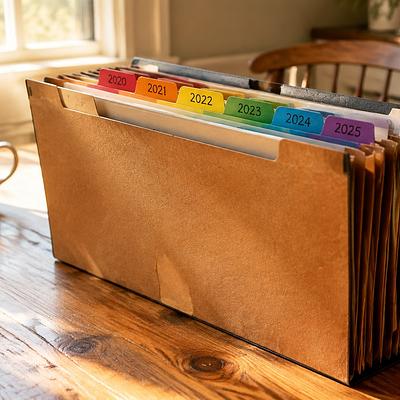
For most households, the answer to how long to keep tax records is three years after you file. After that, the receipts, 1099s and statements behind a return can usually be shredded.
There are exceptions. A few situations stretch the window to six or seven years, and some records, like what you paid for your home, need to stay until long after the tax year they belong to. This guide covers which records fall where, what you can safely shred, and a once-a-year routine that keeps your filing cabinet or file box from filling up. It's written for US federal taxes.
Where the three-year rule comes from
The number comes from the IRS's "period of limitations": the window in which the IRS can review your return and assess more tax, and in which you can amend it to claim a refund. For most returns that window is three years from the date you filed. If you filed early, the clock starts on the due date instead, usually April 15.
In practice, that's the audit window. Audits are uncommon for most households, but if the IRS does question a return, your records are how you show that the income, deductions and credits on it were right. The IRS says an audit generally covers returns filed within the last three years. It may add earlier years if it finds a substantial error, but it usually doesn't go back more than six. That's why the exceptions below have longer periods: they're the situations where the IRS gets more time to look.
So if you filed your 2025 return on April 10, 2026, the window for that return generally closes on April 15, 2029. Once it closes, the receipts, statements and forms you used to prepare that return have done their job.
There's a second clock for refunds. If you paid tax later than you filed, you can claim a refund within three years of filing or two years of paying, whichever is later. For most households these end up in the same place.
When to keep records longer
The three-year rule has exceptions. Most people will never hit one, but it's worth a quick check before you shred.
Your situation | Keep records for |
|---|---|
A normal return, filed on time | 3 years from filing |
You left out income worth more than 25% of the income you reported | 6 years |
You claimed a loss on worthless securities or a deduction for a bad debt | 7 years |
You employ someone in your home, such as a nanny, and file employment taxes | At least 4 years after the tax was due or paid, whichever is later |
You didn't file a return, or filed a fraudulent one | Indefinitely |
This is where the familiar "keep everything for seven years" advice comes from. Seven years covers every exception except the last one, so it's a safe default if you'd rather not think about it. It just means keeping more paper than you need.
Records that outlive the rule
Some records aren't tied to one year's return. They support a number you'll need years from now, so the clock doesn't start until that later return is filed.
- Your tax returns themselves. A copy of each return takes up very little space and answers questions that come up later, from mortgage applications to financial aid forms. Many people keep them permanently and only shred the supporting paperwork. If you lose one, the IRS offers free transcripts, and a full copy of a return from the last seven years costs $30 with Form 4506.
- Home purchase and improvement records. The price you paid plus what you spent on improvements (a new roof, an addition, not repainting) is your home's basis. You'll need it to work out any taxable gain when you sell, so keep these until three years after you file the return for the year you sell.
- Investment purchase records. The same idea applies to stocks, funds and other investments: keep the record of what you paid until three years after you report the sale. Brokers have had to track and report what you paid for most stocks bought since 2011 and most mutual fund shares bought since 2012. Older holdings, and some investments moved between brokers, may not carry that history with them.
- Nondeductible IRA contributions (Form 8606). If you've ever put money into a traditional IRA without deducting it, the Form 8606 for each of those years shows that you've already paid tax on that money. The Form 8606 instructions say to keep them, along with your Forms 5498 and 1099-R, until you've taken all the money out.
- Carryovers. If a loss or credit carries forward to future years, such as a capital loss you're deducting a few thousand dollars at a time, keep the records for the year it started until the carryover is used up, plus three years.
A simple way to handle these: give them their own folder labeled "keep until sold or closed" so they never end up in the yearly shred pile by accident.
Check your state's rules too
Everything above is federal. If you file a state income tax return, your state has its own period of limitations, and some are longer than three years. California, for example, generally has four. Look up your state's tax agency before you shred, or keep supporting records for four years instead of three to leave a margin.
What you can safely shred
Once a return's window has closed and none of the exceptions apply, you can let go of the paperwork that went into it:
- Receipts for deductions you claimed, including charitable donation and medical expense receipts
- 1099 forms for interest, dividends and freelance income
- Bank and credit card statements you kept only to prepare the return
- Childcare and dependent care receipts
- Worksheets, drafts and printouts from tax software
Two things to check first. Before you shred old W-2s, sign in to your my Social Security account and confirm your earnings history looks right, since a W-2 is your best evidence if a year is missing (how to correct your earnings record). And anything that touches the "outlive the rule" list above goes in the long-term folder, not the shredder.
Shred, don't toss. The FTC recommends shredding documents with personal information, and tax paperwork is full of what identity thieves want: your Social Security number, income, bank account numbers and address. A cross-cut home shredder handles a yearly batch. But feeding it a few sheets at a time gets old fast when you're clearing years of backlog, and not everyone owns one. Two other options:
- Shred events. Many towns, banks and credit unions hold free community shred days, often in spring around tax season. A truck with an industrial shredder parks for a few hours, you hand over your boxes, and often you can watch your papers go in. Check the event's box limit before you load the car.
- Drop-off shredding. Office supply and shipping stores often take documents for secure shredding, usually priced by the pound. It costs a little, but you don't have to wait for an event.
Keeping tax records digitally
Much of this paperwork already arrives as a file: W-2s and 1099s in an employer or bank portal, your return as a PDF from tax software, receipts in your email. A full year of tax records as PDFs is usually a few megabytes, so space stops being a reason to get rid of anything. The other two problems with paper don't go away, though: finding a document when you need it, and replacing one that's lost.
- Use the same structure as paper. One folder per tax year (for example, "Taxes 2025") with the return and everything behind it, plus a "Keep until sold or closed" folder. Consistent file names make search work later: year, source and form, like
2025-employer-W-2.pdfor2025-bank-1099-INT.pdf. - Download, don't rely on the portal. Employer, bank and brokerage sites often keep only a few years of documents, and you can lose access to an old employer's portal entirely when you change jobs. Save each form to your folder the year it arrives.
- Scans count. The IRS accepts electronic records as long as they're complete and readable. Scan at a resolution where the small print is legible, open the file to check it, then shred the paper.
- Keep a second copy somewhere else. One laptop is one spill away from losing everything. Add a cloud backup or an external drive stored away from the computer. A synced folder alone isn't a backup: delete a file there and it disappears everywhere.
- Protect it like the paper. These files hold the same Social Security and account numbers. Keep them in an account with two-factor authentication or on an encrypted drive, and don't send them by email.
Because storage costs almost nothing, you can keep digital records longer than three years if you like. The trade-off is risk rather than space: the more old files you keep, the more there is to expose if an account is ever breached. A reasonable middle ground is to keep every return and delete the supporting files on the same "shred after" schedule as paper.
A once-a-year keep and shred routine
The reason tax papers pile up isn't that the rules are hard. It's that sorting them is a once-a-year job, and once-a-year jobs are the easiest ones to forget. They never feel urgent until the file box is full and you can't find last year's W-2. (I wrote more about this in why irregular tasks are such a drain.)
So make it part of filing. Right after you file each spring:
- Make one folder for this year. Put the return and every document you used to prepare it in a single folder, paper or digital. On the front, or in the folder name, write the tax year and a "shred after" date: three years after the date you filed, or seven if one of the exceptions applies.
- Pull out the long-term records. Anything about your home, investments, IRA basis or carryovers goes into the "keep until sold or closed" folder instead.
- Check the oldest folders. Look at the "shred after" dates on the folders from past years. Any that have passed: keep the return itself, and shred or delete the rest.
- Scan while it's all in one place. If you're going digital, scan this year's paper now, while the folder is already together, then shred it. Keeping both paper and digital copies doubles the job next year.
That's about 20 minutes, once a year, and your files stay the same size instead of growing every spring.
The hard part isn't the 20 minutes. It's remembering, next April, that this is a thing you do. If your household runs on someone's memory for tasks like this, this list of adulting tasks that are easy to forget is a good place to find the others hiding alongside it.
When to ask a professional
This guide covers the common cases for a household filing individual returns. If you run a business, have rental property, are dealing with an audit or amended return, or aren't sure whether an exception applies to you, a tax professional can tell you exactly what to keep. It's a short conversation, and much cheaper than recreating a record you've shredded.
Next step
When you file this year, label one folder with this year's "shred after" date and put a reminder on your calendar for the same week next spring. That's the whole system.
I'm building Gantry to hold exactly this kind of once-a-year task, so it comes back to you at the right time instead of living in your head. If that sounds useful, you can join the waiting list. Or browse more life admin posts.
This post is general information about US federal tax recordkeeping, not tax or legal advice. Tax rules change and your situation may differ, so check with the IRS or a tax professional before you shred anything you're unsure about.
Frequently asked questions
- How long do you need to keep tax records?
- For most people, three years from the date you filed the return, or from the due date if you filed early. Keep them six years if you left out more than 25% of your income, seven if you claimed a loss on worthless securities or a bad debt, and indefinitely if you didn't file.
- How far back can the IRS audit?
- Generally three years from when you filed. The IRS can add earlier years if it finds a substantial error, but it usually doesn't go back more than six. There's no limit if a return was never filed or was fraudulent.
- Should I keep old tax returns forever?
- It's a good idea to keep a copy of each return itself, because it's small and useful for loans, financial aid and future questions. The supporting paperwork, such as receipts and 1099s, can usually be shredded once three years have passed.
- Can I throw away tax records after seven years?
- In most cases, yes. Seven years covers every IRS exception except not filing or filing a fraudulent return. The exceptions are records that support a future return, such as home improvement receipts or investment purchase records, which you keep until three years after you sell.
- How long should I keep receipts for taxes?
- Keep receipts for anything you deducted for as long as you keep the return they support, usually three years after filing. Receipts for home improvements are different: keep those until three years after you file the return for the year you sell the home.
- Can I keep tax records digitally instead of on paper?
- Yes. The IRS accepts electronic copies, including scans, as long as they're complete and legible. Organize them by tax year and keep a second copy somewhere else, because a lost file is as hard to replace as lost paper.
Stay on top of what matters
Join the waiting list for early access to Gantry, plus a personal discount code.